
Causes of Water Ingress and Structural Weakness
Concrete and masonry structures are highly durable, but they remain vulnerable to water. Common causes of leaks include:
– Hydrostatic pressure driving groundwater into basements, tunnels, or tanks through cracks, joints, or porous concrete.
– Foundation movement due to reactive clays, tree roots, poor drainage, or plumbing failures that open up new pathways for water.
– Caulking failure in slabs or expansion joints, allowing moisture to penetrate and erode the supporting soils beneath.
– Surface degradation in high-traffic or chemically aggressive environments, where protective coatings have worn away.
Signs of Failure
Early warning signs of leaks and water damage should never be ignored. These include:
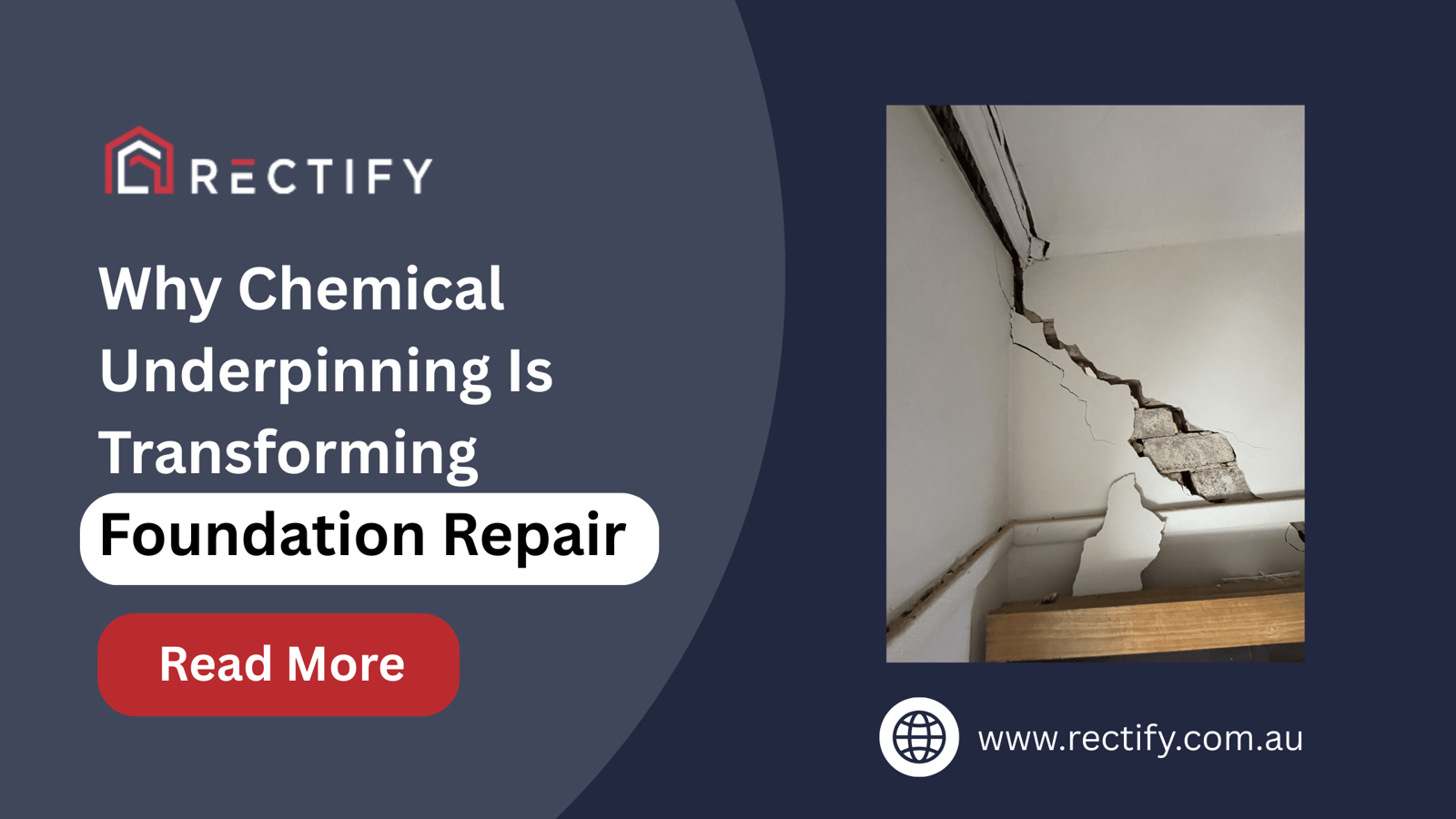
– Visible cracks in walls, slabs, or basements.
– Stains or efflorescence indicating moisture migration.
– Pooling water around floors or driveways where drainage once worked.
– Spalling and rusting reinforcement (concrete cancer) from water ingress.
– Bulging or hollow sounds in slabs, indicating voids beneath.
These symptoms highlight both immediate serviceability issues and long-term risks to structural integrity.
Effects if Left Untreated
Uncontrolled water ingress doesn’t remain a nuisance — it escalates into structural damage. Potential effects include:
– Corrosion of reinforcement and spalling of concrete.
– Settlement of slabs and differential footing movement.
– Accelerated deterioration of tanks, basements, and retaining structures.
– Health and safety hazards for building occupants.
– Reduced property value and costly emergency interventions later.
Repair Options
Several solutions exist to stop leaks and restore integrity:
– Conventional earthworks involve excavation and external re-waterproofing but are invasive, slow, and costly.
– Surface patching or concealment may hide the visible symptoms but does not address the root cause.
– Protective and tank seal coatings strengthen concrete against further chemical, water, or abrasion damage.
– Resin injection provides the most effective solution: polyurethane resins are pressure-injected into cracks, voids, and joints, where they expand, seal water pathways, and improve the surrounding soil structure.
Long-Term Benefits of Resin Injection
Polyurethane resin sealing delivers benefits far beyond cosmetic repair:
– Permanent water exclusion by displacing moisture and sealing leak paths.
– Improved soil and footing performance, reducing seasonal reactivity and preventing further movement.
– Non-invasive process requiring minimal disruption and no excavation.
– Fast curing for rapid return to service.
– Durability and safety, ensuring structures continue to perform well beyond their original design life.
Why Rectify Group?
At Rectify Group, we specialise in professional resin-based leak sealing services and ground remediation. Our approach is built on:
– Engineering expertise to diagnose underlying causes, not just visible symptoms.
– Proven technologies tailored to basements, slabs, tanks, and civil infrastructure.
– A focus on asset preservation, ensuring long-term performance with minimal disruption.
– Safe, compliant, and environmentally responsible practices that deliver certainty of outcome.
Conclusion
Water ingress is one of the leading contributors to long-term structural deterioration. Left untreated, small leaks progress into major failures, compromising safety and asset value. Resin injection provides a reliable, permanent, and non-invasive solution that addresses both the cause and the effect of water ingress. With decades of experience in ground remediation, waterproofing, and structural repair, Rectify Group is the trusted partner to protect and extend the life of your assets.


Write a comment ...